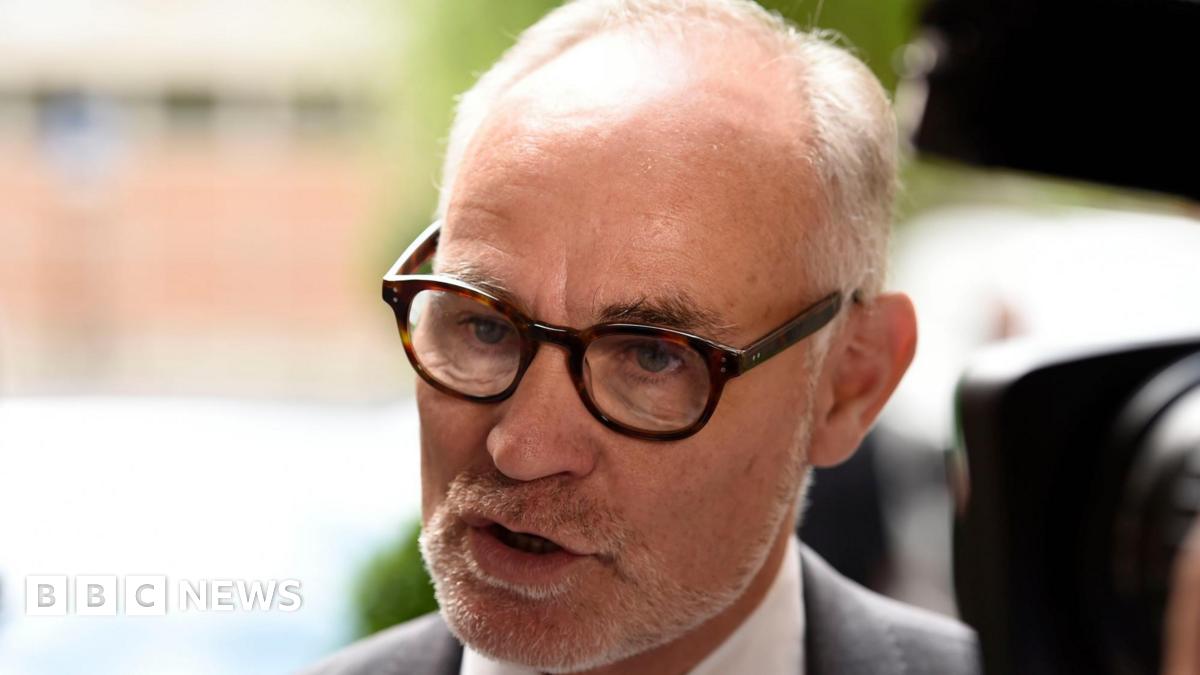
Former Tory MP Crispin Blunt Charged with Four Drug Offences: An Unprecedented Development
In a development that has sent ripples through Westminster and beyond, Crispin Blunt, the former Conservative Member of Parliament for Reigate, has been formally charged with four drug offences. The charges, announced by the Crown Prosecution Service (CPS), mark a significant moment, bringing a prominent public figure into the spotlight of the criminal justice system. Blunt, 65, who dedicated over two decades to representing his constituency and held significant ministerial roles, now faces a series of serious allegations. These charges, encompassing both Class A and Class B controlled substances, underscore the impartial reach of the law and raise important questions about the responsibilities that accompany public office. The news of mp blunt four charges has sparked widespread discussion, particularly given his extensive background in public service, including a tenure as a justice minister.
The Allegations: A Closer Look at the Charges Against Crispin Blunt
The specific charges laid against Crispin Blunt are precise and carry considerable weight under UK drug legislation. He stands accused of one count of possessing a controlled drug of Class A and three counts of possessing controlled drugs of Class B. The Class A drug is alleged to be methamphetamine, a powerful and highly regulated substance. The Class B drugs involved are alleged to be GBL (gamma-butyrolactone), cannabis, and amphetamine. These classifications are crucial, as they dictate the potential penalties and the seriousness with which the offences are viewed by the courts.
- Class A Drug (Methamphetamine): Possession of a Class A drug like methamphetamine carries the most severe penalties under UK law, reflecting its high potential for harm and addiction. Conviction can lead to a maximum of seven years in prison, an unlimited fine, or both.
- Class B Drugs (GBL, Cannabis, Amphetamine): While less severe than Class A, possession of Class B drugs such as GBL, cannabis, and amphetamine still carries significant penalties. These can include up to five years in prison, an unlimited fine, or both. GBL, in particular, is noted for its use as a recreational drug and its potential for harm.
These charges stem from an incident on 25 October 2023, when police attended Mr. Blunt's home address in Horley, Surrey. Crucially, the Crown Prosecution Service has clarified that this police presence was "in relation to a separate matter," and the drug charges arose from searches conducted during that attendance. This detail suggests that the drug offences were discovered incidentally rather than being the initial focus of the police investigation, adding another layer of complexity to the narrative surrounding the mp blunt four charges. The meticulous process of evidence gathering and legal assessment by Surrey Police and the CPS has culminated in the decision to bring these allegations to court.
Crispin Blunt's Illustrious Political Career and Public Service
Before these allegations emerged, Crispin Blunt enjoyed a distinguished and lengthy career in British politics. He served as the Conservative Member of Parliament for Reigate from 1997 until 2024, representing his constituents for over a quarter of a century. His tenure was marked by several significant appointments and influential roles within Parliament:
- Parliamentary Under-Secretary of State for Prisons and Probation: From 2010 to 2012, under then-Prime Minister David Cameron, Blunt served in the Ministry of Justice. In this capacity, he oversaw critical aspects of the UK's penal system, a role that now stands in stark contrast to the current drug charges.
- Chair of the Foreign Affairs Select Committee: Between 2015 and 2017, he chaired the influential Commons Foreign Affairs Select Committee, where he played a key role in scrutinising government policy on international relations and defence.
His political journey took a decisive turn following his arrest in October 2023. At that point, the Conservative whip was removed, leading him to sit as an independent MP. He subsequently announced that he would not seek re-election in 2024, bringing an end to his long parliamentary career. His deep experience within the machinery of government, particularly his insights into the justice system, makes the present situation regarding the mp blunt four charges particularly striking. His public life has consistently involved advocating for various causes and contributing to policy-making, making this legal challenge an unprecedented chapter in his story.
The Legal Process and Public Interest Considerations
The decision to charge Crispin Blunt was announced by Malcolm McHaffie, head of the CPS Special Crime Division, following a rigorous assessment process. The CPS operates under a two-stage test to determine whether to prosecute:
- Evidential Stage: Prosecutors must be satisfied that there is sufficient evidence to provide a realistic prospect of conviction. This means considering whether a jury or magistrates, properly directed in accordance with the law, are more likely than not to convict the defendant.
- Public Interest Stage: Even if there is sufficient evidence, a prosecution will only proceed if it is in the public interest. This involves weighing various factors, such as the seriousness of the offence, the level of culpability of the suspect, and the impact of the crime on the community.
Mr. McHaffie explicitly stated that the CPS prosecutors "have worked to establish that there is sufficient evidence to bring this case to court and that it is in the public interest to pursue criminal proceedings." This statement underscores the thoroughness of the investigation and the careful consideration given before proceeding with charges against a former public official. The CPS also worked closely with Surrey Police throughout their investigation, ensuring a coordinated approach.
A fundamental principle of the UK justice system is the right to a fair trial. The CPS issued a vital reminder that "criminal proceedings against this defendant are active and that he has the right to a fair trial." They further urged caution against any actions that could prejudice these proceedings, stating, "It is vital that there should be no reporting, commentary or sharing of information online which could in any way prejudice these proceedings." This highlights the sensitivity of ongoing cases and the importance of respecting legal due process.
Crispin Blunt is scheduled to appear at Westminster Magistrates' Court on 25 March. This initial court appearance will typically involve the formal reading of the charges, and Mr. Blunt will likely be asked to enter a plea. Westminster Magistrates' Court handles a wide range of criminal matters, from minor infractions to the initial stages of more serious cases, particularly those involving individuals of public prominence within the capital.
For more detailed information on the specific drugs and the court date, you can refer to our article Crispin Blunt: Class A & B Drug Charges, Court Date Set. Additionally, insights into the broader allegations can be found in Ex-Justice Minister Crispin Blunt Faces Four Drug Allegations.
Implications and the Road Ahead for Crispin Blunt
The decision to bring these mp blunt four charges carries significant implications, both for Crispin Blunt personally and for the broader public perception of accountability in public life. For Blunt, the legal proceedings ahead will be a challenging period, with the potential for severe penalties if convicted, including custodial sentences or substantial fines, depending on the specifics of the evidence and any mitigating factors. Beyond the immediate legal consequences, there will undoubtedly be a profound impact on his reputation and legacy, particularly given his former role as an ex-justice minister, a position that inherently demands adherence to the rule of law.
This case also serves as a stark reminder that no individual, regardless of their past position or influence, is above the law. The principle of equality before the law is a cornerstone of the UK's justice system. While the charges are serious, it is crucial to remember the presumption of innocence, and that Mr. Blunt is entitled to present his defence and receive a fair hearing.
From a societal perspective, cases involving public figures and drug offences often ignite debates about drug policy, enforcement, and the pressures faced by individuals in high-profile roles. The presence of Class A substances like methamphetamine, alongside Class B drugs, underscores the diverse nature of drug challenges facing individuals across all segments of society. The resolution of this case will be closely watched, not only by the media and the public but also within political circles, as it pertains to the standards of conduct expected from those who serve the nation.
The upcoming court appearance on 25 March will mark the formal beginning of the judicial process, where more details may emerge regarding the prosecution's case and Mr. Blunt's defence. The legal journey ahead will be complex and will unfold under intense scrutiny.
Conclusion
The announcement that former Tory MP Crispin Blunt has been charged with four drug offences – one Class A and three Class B – represents a significant and sobering development. These charges, which include allegations of possessing methamphetamine, GBL, cannabis, and amphetamine, follow a police search of his home last October. As a former justice minister and long-serving MP for Reigate, Mr. Blunt's case brings into sharp focus the principle of legal impartiality and the responsibilities of public figures. With the Crown Prosecution Service affirming both sufficient evidence and public interest, the legal process is now set to commence. Crispin Blunt is due to appear at Westminster Magistrates' Court on 25 March, where the formal proceedings will begin. It remains imperative that the legal process is allowed to run its course fairly and without prejudice, upholding the fundamental right to a fair trial for all.